
Most companies are sitting on incredibly valuable documentation—internal guides, research, product specs, and expert analysis—that should be powering decisions across the entire business. The challenge is that this knowledge is locked away, difficult to find, and rarely accessible when it’s needed most.
The result is a massive waste. Experts are interrupted with basic questions, marketers skip in-depth research, and support agents give inconsistent answers.
This is where RAG (Retrieval-Augmented Generation) becomes a business-critical technology. RAG is an AI framework that grounds large language models (LLMs) in a specific, private set of data. Instead of giving generic answers based on the public internet, a RAG-powered AI gives you answers based only on your approved, internal documents.
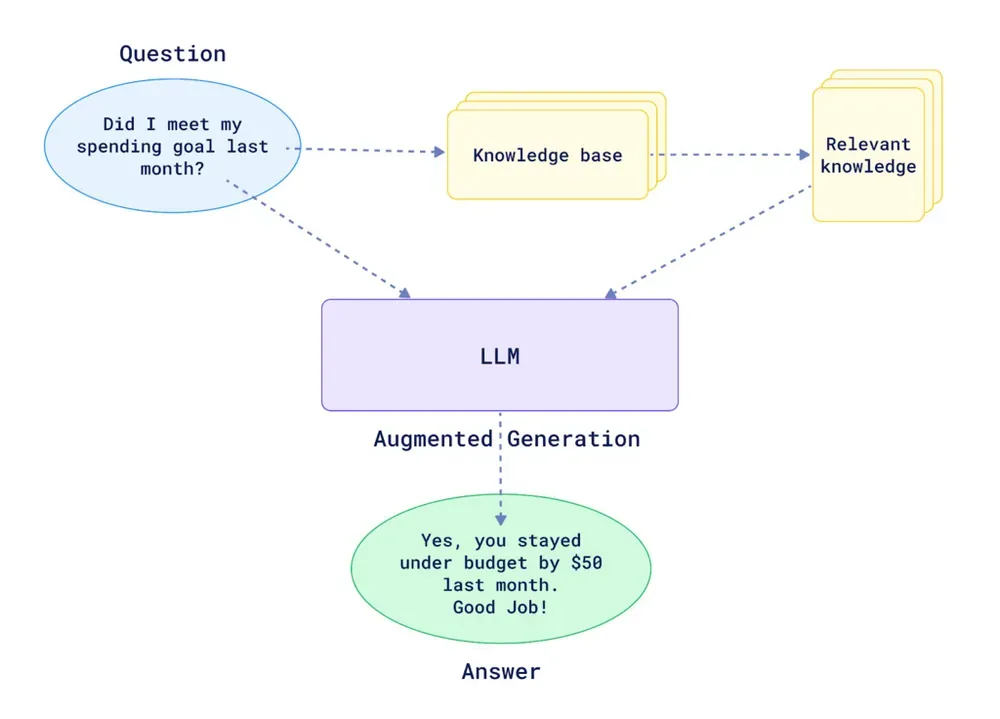
Businesses that succeed in integrating RAG into their core workflows will significantly increase productivity, unlock expert knowledge, and create undeniable value. 2026 is around the corner—here are the top use cases you need to be implementing.
1. RAG for Marketing Content Generation
The Problem: Your marketing team needs to write a technical SEO article. To get the facts right, they have to bother your top industry experts and product managers. It’s a huge waste of time. Your experts get interrupted, and your marketers get blocked. They could try to find the answers in your company documentation, but let’s be honest—that takes forever, and they’ll probably just skip it.
The RAG Solution: Instead of letting marketers skip the research step—which often accounts for 70% of an article’s performance—RAG makes your internal knowledge instantly accessible.
Imagine your team querying all your company’s “knowledge” at once. This includes:
- Product documentation: To accurately pitch solutions and use the right terminology.
- Expert research: Such as methodology documents, regulations, or market analysis.
- Past content: To find insights and opportunities for internal linking.
- Case studies & quotes: To embed human stories and make content more impactful.
Watch here how we built a full-stack app leveraging Lookio, Softr, n8n, and Linkup for AI web-search.
By grounding the LLM in your own high-quality data, you avoid generic, non-valuable content and instead embed unique expertise into every piece. This is one of the most powerful AI automations for SEO.
You can build extremely useful workflows to scale this. For instance, an n8n workflow template exists that operationalizes this exact process. It allows an AI to break a primary topic down into sub-topics, automatically runs a RAG query for each sub-topic against your documentation, and finally consolidates all the retrieved insights for a final, fact-checked article draft.
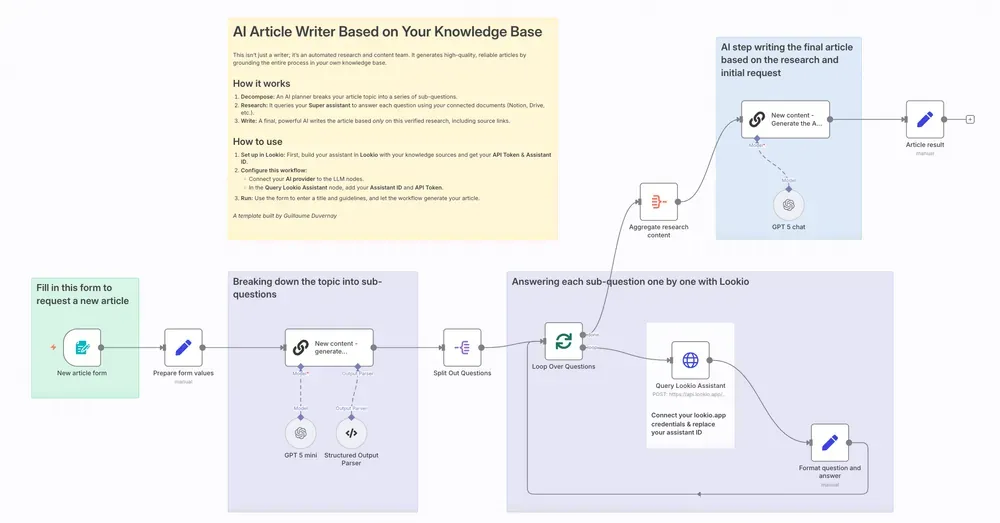
The Result: Marketers are unblocked, experts are uninterrupted, and your SEO content is built from your company’s unique expertise.
2. RAG for Customer-Facing Support Bots
The Problem: For years, “chatbots” meant frustrating, rule-based systems that could barely handle a typo. General-purpose AI, while conversational, brought a new problem: “hallucinations.” A bot that confidently invents answers or product features is a support-ticket-in-waiting and a potential liability.
The RAG Solution: The 2026 vision for support bots is a “Smart Agent” model powered by RAG. This approach moves beyond simple Q&A. The bot is an “agent” with a specific set of tools, and its most important tool is RAG, connecting it directly to your company’s private knowledge.
How it works:
- Grounded knowledge: You feed a RAG platform (like Lookio) all your trusted data: product documentation, PDFs, internal wikis (Notion, Jira, etc.), and past support articles. The AI’s knowledge is now grounded in this single source of truth.
- The “Smart” agent layer: The bot doesn’t always use its RAG tool. For simple small talk (“Hi” or “Thanks”), it uses a fast, cheap AI model. For substantive questions (“What’s your return policy for sale items?”), it intelligently deploys its RAG tool.
- The RAG-powered answer: The tool retrieves the exact, relevant information from your documents and provides it to the agent. The agent then synthesizes this factual information into a helpful, natural-language answer, often including direct links to the source documents.
The result: This model is a massive leap in efficiency. You dramatically reduce hallucinations, and the “smart agent” logic saves money by not using expensive API calls for simple greetings.
Best of all, you can turn a support bot into a sales agent.
- Prospect: “Can your product be used for the fashion industry?”
- Bot (using RAG): “Yes, our platform is used by several fashion brands. Based on our documents, it excels at supply chain emissions tracking…”
- Bot (next step): ”…Would you like me to schedule a 15-minute demo with our sales team to show you how?”
To get started, steal our workflow template and watch our implementation video.
The agent seamlessly transitions from a support role (RAG tool) to a sales-enablement role (“Schedule Meeting” tool), turning a cost center into a 24/7, expert revenue driver.
3. RAG for Internal Chatbots (HR & Operations)
The Problem: “Where is the new remote work policy?” “How do I submit an expense report?” “What’s our Q4 sales strategy?” In any growing company, these questions swamp HR, operations, and leadership teams. Employees get frustrated trying to find answers, and critical knowledge remains siloed.
The RAG Solution: Implement a RAG-enabled internal chatbot directly within your existing tools like Slack or Microsoft Teams. This bot isn’t for customers; it’s for your employees.
You ground this internal assistant in your entire “ops” knowledge base:
- HR policies: Employee handbooks, PTO policies, benefits-enrollment guides.
- Financial docs: Expense reporting guidelines, procurement processes.
- IT & security: “How to set up a VPN” guides, security protocols.
- Company strategy: Internal memos, market analysis, quarterly goals.
The result: You create a single, reliable “company brain.” A new hire can ask, “What are the 401k matching rules?” and get an instant, sourced answer instead of waiting two days for an HR email. A sales rep can ask, “What’s our official positioning on competitor X?” and get the approved marketing language, instantly.
This makes your entire team more autonomous, ensures alignment, and frees your expert teams (HR, Ops, Legal) from repetitive, low-value interruptions.
4. RAG for Sales Prospecting & Outreach
The problem: Generic, AI-written sales outreach is the new spam. “Hi [Name], I see you work at [Company]…” messages get ignored and deleted. True personalization—understanding a prospect’s specific challenges and connecting them to your specific solution—takes hours of manual research per prospect.
The RAG solution: Build an AI-assisted “Prospecting Agent” workflow. RAG is the key component that connects generic prospect research to your company’s specific value.
How it works:
- Input: A sales rep provides a prospect’s company URL or LinkedIn profile.
- External research: A standard AI agent scrapes the prospect’s site and recent news to identify their key business initiatives (e.g., “They are expanding into Europe” or “They just launched a new sustainability report”).
- Internal RAG query: This is the magic step. The AI takes that research and queries your internal RAG knowledge base: “Retrieve case studies of our work with European retail clients,” or “Find technical docs explaining how we solve supply chain emissions.”
- Synthesized outreach: The AI merges the external research with the internal, RAG-sourced proof points to write a hyper-relevant email.
The result: Your outreach messages transform from generic spam into expert consultations.
- Before: “Hi, I’d love to show you a demo of our software.”
- After (with RAG): “I saw your new sustainability report. Our other clients in the fashion industry, like [Case Study Name], use our platform to solve the exact Scope 3 emissions calculations you mentioned. I’ve attached a one-page doc on how we do it.”
You are no longer just selling; you are solving. This is how you’ll cut through the noise in 2026.
How to Implement RAG: The “Build vs. Buy” Dilemma
These use cases sound powerful, but building a robust RAG system from scratch is incredibly complex. You have to nail eight different aspects: handling file types, robust data ingestion, chunking strategy, metadata tagging, a vector database, and the entire retrieval and synthesis logic.
For companies that aren’t AI-native, a DIY approach is a high-risk, high-cost distraction.
This is why we built Lookio.
NotebookLM and other individual tools are great, but they lack an API, making them impossible to integrate into your business workflows. Lookio is an API-first platform designed to solve this problem. It’s the easiest way to get highly reliable, sourced knowledge retrieval that you can actually automate.
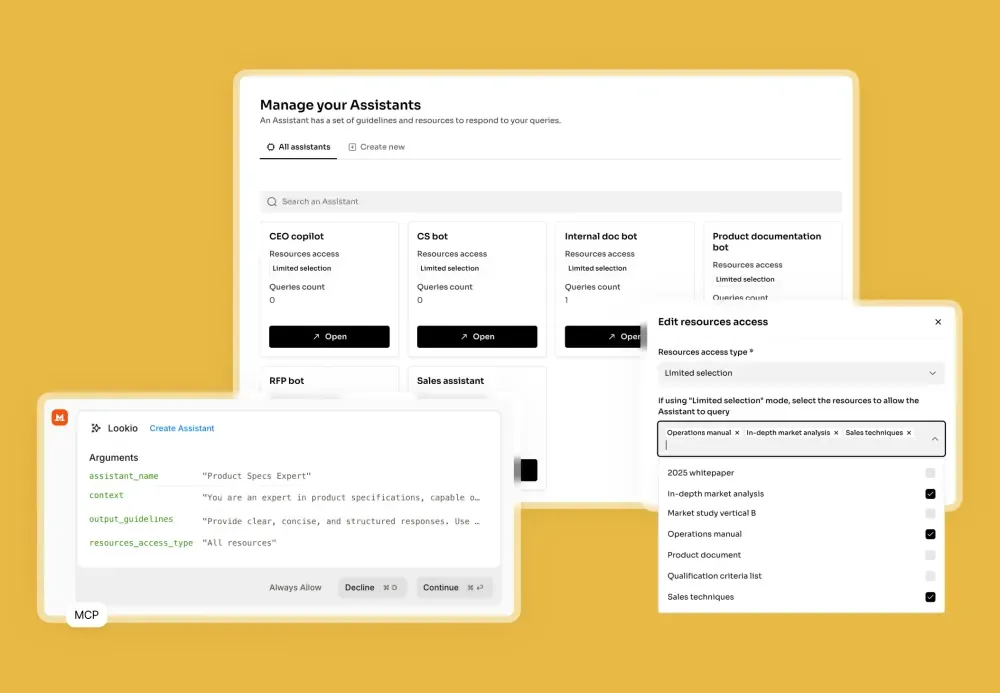
Lookio is built for businesses to connect to the tools you already use—whether it’s powering a Slack bot, integrating with an n8n workflow, or feeding insights into your custom application.
2026 is Closer Than You Think
The challenge for businesses is no longer if they should use AI, but how to use it effectively. Generic AI gives generic results.
The companies that win will be those that leverage AI to unlock their own unique, internal expertise. By documenting your business processes and expert knowledge, you can finally collect the dividends on that documentation. RAG is the technology that makes it possible, and Lookio is the platform that makes it easy.
Start building today. Sign up for Lookio and get 100 free credits to build your first expert assistant.